
Running a shop, restaurant, pharmacy or salon involves far more than making sales. You need to track stock, manage staff, handle different payment methods, issue receipts, monitor profits and keep proper records for tax purposes. Doing all of that with notebooks and calculators is slow, stressful and prone to mistakes and theft. A good point of sale (POS) system brings everything together in one place, helping you serve customers faster and make better business decisions. This guide explains what POS software does, the features that matter most and how to choose the right system for your business.
What is POS software?
POS software is the program that runs at the checkout point where customers pay. At its most basic, it records sales and prints receipts. Modern systems do much more: they manage inventory, track payments, generate sales reports, manage employees and customers, and connect with accounting and tax systems. The software usually runs on a computer, tablet or dedicated POS terminal, often combined with hardware such as receipt printers, barcode scanners and cash drawers.
Because there are so many systems available, from simple apps for small shops to advanced multi-branch solutions, it pays to compare options before committing. If you are shopping in Kenya, browsing current offers for POS software lets you compare systems designed for retail shops, supermarkets, restaurants, pharmacies and other businesses, along with their pricing models, features and support options. Seeing several solutions side by side makes it much easier to find one that fits your business and budget.
Benefits of using a POS system
- Faster checkout: scanning barcodes and processing payments quickly reduces queues.
- Accurate stock control: inventory updates automatically with every sale, so you know what is running low.
- Reduced theft and errors: every transaction is recorded, and user permissions limit what each employee can do.
- Better decisions: reports show best-selling products, slow movers, peak hours and profit margins.
- Professional service: printed or digital receipts, loyalty programmes and consistent pricing improve customer trust.
- Easier tax compliance: organised records make it simpler to meet tax obligations and prepare for audits.
Key features to look for
Sales and payment processing
The system should handle cash, card and mobile money payments smoothly, including split payments, discounts, returns and refunds. In markets where mobile money is widely used, integration with M-Pesa till or paybill numbers is a major advantage because payments can be confirmed and recorded automatically, reducing fraud and reconciliation errors.
Inventory management
Good inventory features include stock tracking, low-stock alerts, purchase orders, supplier management, stock transfers between branches and support for product variations such as sizes and colours. Pharmacies, supermarkets and food businesses also benefit from batch and expiry date tracking.
Reporting and analytics
Look for clear daily, weekly and monthly reports on sales, profits, stock levels, employee performance and payment methods. The ability to export reports to spreadsheets or accounting software saves time.
Tax compliance
Tax requirements for issuing invoices and receipts are becoming increasingly digital. In Kenya, for example, the Kenya Revenue Authority has introduced electronic tax invoicing requirements through its eTIMS system. Ask vendors whether their software supports current KRA requirements, and confirm the details with KRA or a tax professional.
User roles and security
The system should allow you to create different user accounts with specific permissions. For example, cashiers may process sales but not change prices or delete transactions, while managers can access reports and approve refunds. Activity logs show who did what and when.
Customer management
Customer profiles, purchase history, loyalty points, credit sales tracking and SMS or email promotions help build repeat business.
Offline mode
Internet connections are not always reliable. A system that continues working offline and syncs data once the connection returns prevents lost sales and frustrated customers.
Multi-branch support
If you have or plan to open more than one location, choose software that manages multiple branches from a single dashboard, with centralised reports and stock transfers.
Cloud-based vs on-premise POS
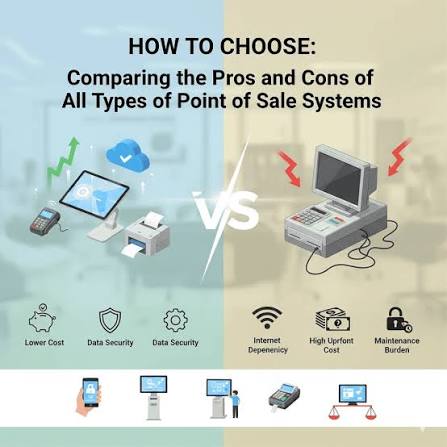
Cloud-based POS stores data online, allowing you to check sales and stock from your phone or laptop anywhere. Updates and backups are usually automatic, and costs are typically paid as a monthly or annual subscription. However, it depends on internet access unless it includes a good offline mode.
On-premise POS is installed on a local computer or server. It works without internet and often involves a one-time licence fee, but you are responsible for backups, security and updates, and remote access may be limited.
Many businesses now choose cloud-based systems with offline capabilities for the best of both worlds.
Choosing POS software for your type of business
- Retail shops and boutiques: barcode scanning, product variations, stock alerts and customer loyalty features.
- Supermarkets and minimarts: fast checkout, weighing scale integration, large inventory handling, supplier management and multiple tills.
- Restaurants, cafés and bars: table management, kitchen order tickets, menu modifiers, split bills, waiter tracking and recipe-based stock control.
- Pharmacies: batch and expiry tracking, prescription records and product categorisation.
- Hardware stores: units of measure, bulk pricing, credit sales and supplier management.
- Salons and spas: appointment booking, staff commissions and service packages.
- Hotels and lodges: integration with room billing and property management systems.
Hardware you may need
- POS terminal, computer or tablet: runs the software.
- Receipt printer: thermal printers are fast and do not need ink.
- Barcode scanner: speeds up checkout and reduces pricing errors.
- Cash drawer: opens automatically when a cash sale is completed.
- Customer display: shows prices and totals to customers for transparency.
- Weighing scale: for supermarkets, butcheries and grocery stores.
- Kitchen printer or display: sends orders directly to the kitchen in restaurants.
- Power backup: a UPS keeps the system running during short power outages.
Before buying hardware, confirm that it is compatible with the software you choose.
Understanding pricing models
- One-time licence: you pay once for the software, sometimes with optional annual fees for updates and support.
- Subscription: a monthly or annual fee that usually includes updates, cloud hosting and support.
- Per-user or per-branch pricing: costs increase as you add cashiers, devices or locations.
- Setup and training fees: some vendors charge for installation, data import and staff training.
Ask for a clear written quote that lists all costs, including hardware, installation, training, support and future upgrades.
Questions to ask before buying
- Can I get a free demo or trial period?
- Does it work offline, and how does data sync?
- Does it integrate with mobile money, accounting software and tax systems?
- How is my data backed up, and who owns it?
- What support is available, during which hours, and how quickly do you respond?
- Is training included for my staff?
- How easy is it to add products, users or branches as my business grows?
- Can I export my data if I decide to switch systems later?
Common mistakes to avoid
- Choosing on price alone: the cheapest system may lack features you need later or offer poor support when something goes wrong.
- Ignoring industry fit: a restaurant using a basic retail POS will struggle with table orders and kitchen tickets.
- Skipping the demo: always test the software with real products and real scenarios before paying.
- Buying hardware first: choose the software, then buy compatible hardware.
- Sharing one login: when all staff use the same account, you lose accountability and the ability to trace errors.
Protecting your business data
Your POS system holds valuable information about sales, stock, suppliers and customers. Use strong passwords, give each employee their own login, restrict access to sensitive reports and settings, and make sure data is backed up regularly. If you store customer details such as phone numbers, handle them responsibly and in line with applicable data protection laws. Ask your vendor how data is stored, encrypted and protected, and what happens to your data if you stop using the service.
Implementation tips
- Prepare your product list with names, prices, barcodes, categories and current stock levels.
- Train your staff before going live, and choose one person as the system champion.
- Start with core features such as sales and inventory, then add advanced features gradually.
- Do a stock count before switching over so your starting inventory is accurate.
- Review reports weekly to spot problems early and make better decisions.
The bottom line
The right POS software can transform how your business runs, speeding up sales, reducing losses and giving you clear insight into your performance. Choose a system designed for your type of business, make sure it supports the payment methods and tax requirements you need, check that it works reliably offline and with your hardware, and understand the full costs before committing. With the right POS system in place, you can spend less time on paperwork and more time growing your business.