
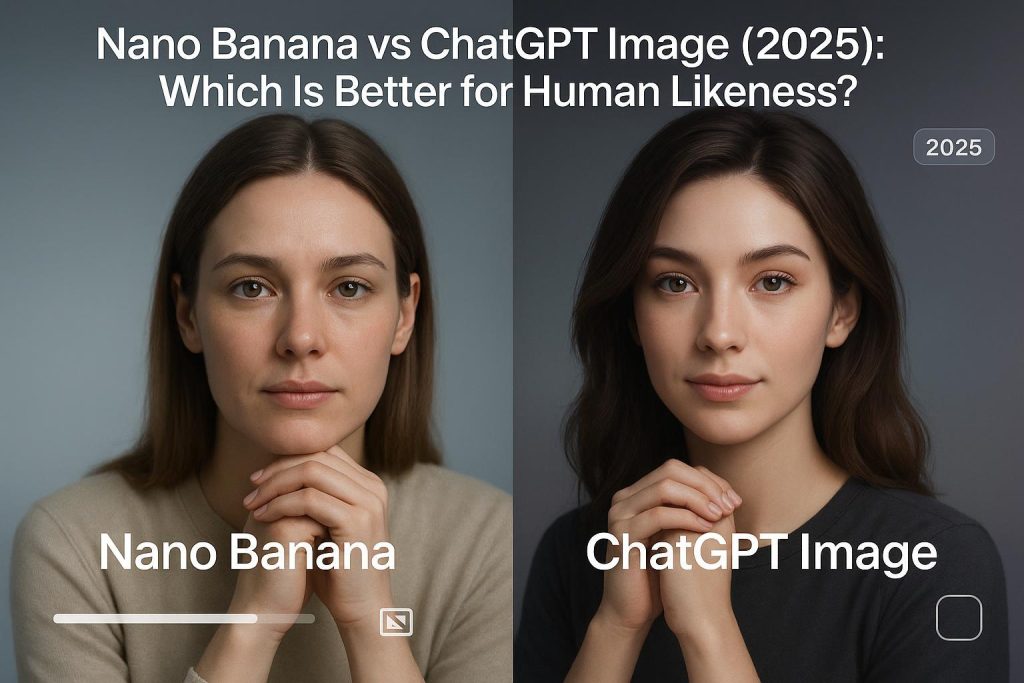
Google’s Nano Banana Pro has dominated the AI image generation conversation for months. But OpenAI is preparing its response. Three codenamed models — maskingtape, gaffertape, and packingtape — have appeared in anonymous Chatbot Arena testing, and early reports suggest these represent OpenAI’s upcoming GPT Image 2. With users already reporting random triggers of the new model inside ChatGPT, the next chapter of the AI image war is taking shape.
Here is what we know about both models and how they stack up based on available evidence.
Nano Banana Pro: The Current Leader
Nano Banana Pro, built on Google’s Gemini 3 Pro architecture, currently sits at the top of most image generation benchmarks. Its core strengths are well documented through months of real-world testing.
Photorealism is where it excels most. In side-by-side comparisons, Nano Banana Pro consistently produces images with sharper surface detail, more convincing lighting, and more natural skin textures. Product photography, street scenes, and editorial-style images often come out looking indistinguishable from real photographs.
Text rendering is another clear advantage. When generating infographics, posters, or visuals with embedded typography, Nano Banana Pro delivers cleaner results at all sizes. It also supports 2K resolution output and eight different aspect ratios, giving creators more flexibility in production workflows.
The tradeoff is speed. Nano Banana Pro prioritizes quality over generation time, which means it is not always the best fit for high-volume iteration workflows where dozens of variants are needed quickly.
GPT Image 2: What the Leaks Reveal
While OpenAI has not officially announced GPT Image 2, the evidence is mounting. Developers noticed backend changes in ChatGPT’s image generator starting in late 2025 — shifts in rendering latency, higher fidelity in textures and shadows, better multi-object prompt handling, and metadata tags in output files that did not exist in GPT Image 1.5.
The timing also lines up. OpenAI shut down Sora on March 24, 2026, freeing significant compute resources. Industry analysts believe this reallocation is directly connected to the accelerated development of GPT Image 2, which is expected to be deeply integrated into the GPT-5 family rather than functioning as a standalone model.
Early Arena testing of the codenamed models shows notable improvements over GPT Image 1.5 in spatial reasoning, compositional accuracy, and stylistic range. If these results hold at general release, GPT Image 2 could close the photorealism gap with Nano Banana Pro while maintaining the speed and prompt adherence advantages that GPT Image 1.5 was already known for.
How to Think About Choosing Between Them
For users who need production-ready photorealistic output today, Nano Banana Pro remains the safer choice. Its track record is established, and its strengths in realism and text rendering are well proven.
For those who want to start working with GPT-based image generation ahead of the official GPT Image 2 launch, tools like gpt image 2.0 already provide streamlined access to the latest GPT image technology — no API keys, no ChatGPT subscription limits, just a clean interface for fast generation and iteration.
What Happens Next
The competitive dynamic between Google and OpenAI in image generation has never been this intense. Nano Banana Pro raised the bar significantly, and GPT Image 2 appears designed to match or exceed it across key dimensions. For anyone producing visual content professionally, staying current with both ecosystems is no longer optional — it is the only way to ensure you are using the best tool for each specific task.