
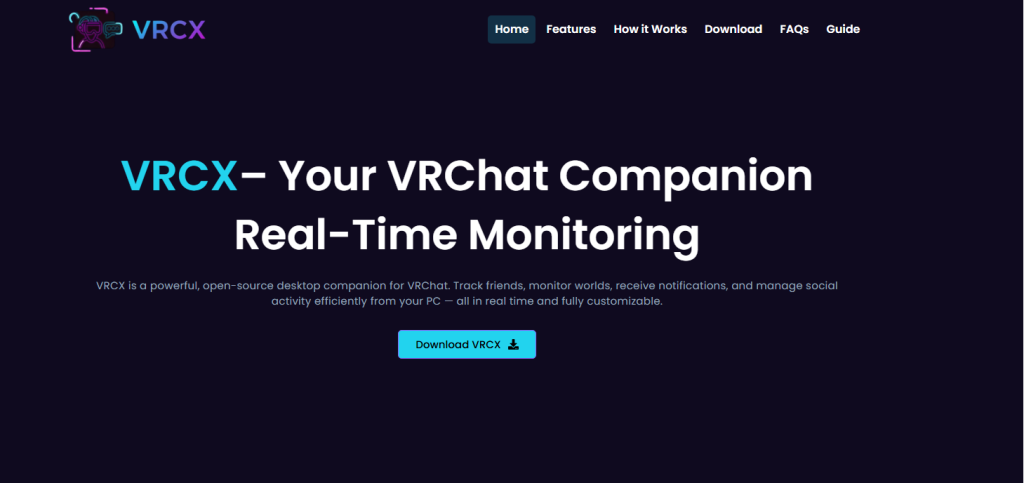
In recent years, virtual reality platforms and their supporting tools have expanded beyond gaming and social interaction into areas that touch education, remote collaboration, and digital community management. One such tool is VRCX, which is widely known among users of VRChat. While VRCX is primarily designed as a companion application for tracking activity, managing friends, and monitoring in-game or in-world interactions, a growing number of users have started asking whether it can also support business-related tasks.
To answer this question properly, it is important to understand what VRCX actually does, where it fits into digital workflows, and what limitations it may have when compared to traditional business tools.
Understanding VRCX and Its Core Purpose
VRCX is not a conventional business software application. It is built around enhancing the user experience within VRChat by offering extended data tracking and interface features that are not available in the base platform. It helps users monitor social interactions, world visits, friend activity, and system logs in a more structured way.
In simple terms, VRCX acts as a data companion tool. It organizes information that is already generated through VRChat usage and presents it in a more accessible format. This makes it useful for users who are highly active in VR communities and want better insight into their engagement patterns.
However, its core design is not oriented toward enterprise workflows such as project management, customer relationship tracking, financial planning, or formal team collaboration systems.
The Idea of Business Use in a VR Context
When people ask whether VRCX can be used for business tasks, they are often thinking beyond traditional office environments. Business in digital spaces can include community management, virtual event coordination, brand engagement in VR spaces, or even hosting training sessions inside immersive environments.
In such contexts, tools like VRCX can play a supporting role. It can help administrators or community managers understand user activity trends, track engagement levels, and observe how participants interact within VR environments. This kind of insight can be valuable for organizations experimenting with virtual reality as part of their marketing or engagement strategy.
Still, it is important to distinguish between supportive analytics and full business operation systems. VRCX is closer to a monitoring tool than a complete business suite.
Potential Business-Related Uses of VRCX
One of the most practical ways VRCX can contribute to business-related activity is through community management. For example, organizations that run branded VR spaces or social events inside VRChat can use VRCX to observe user participation patterns. This includes identifying peak activity times, frequently visited environments, and user interaction behaviors.
Another possible use is in event tracking. Businesses experimenting with virtual events can benefit from understanding how attendees move through different virtual spaces, how long they stay engaged, and which experiences attract the most attention. VRCX can help provide this kind of behavioral overview.
It can also support informal research activities. Companies exploring user experience in virtual reality environments may use tools like VRCX to gather observational insights. These insights can then inform decisions about design, engagement strategies, or content placement.
However, these uses remain indirect. VRCX does not offer formal reporting systems, structured databases, or workflow automation that typical business environments require.
Limitations for Business Applications
Despite its usefulness in specific scenarios, VRCX has clear limitations when it comes to serious business applications. It is not designed for task management, team coordination, or enterprise-level analytics. It lacks built-in features for scheduling, document collaboration, financial tracking, or customer relationship management.
Another limitation is scalability. Business environments often require tools that can support large teams, multiple departments, and integrated workflows. VRCX is built around individual user data within VRChat rather than organizational structures.
There is also the issue of data scope. VRCX only works with information generated within VRChat. This means it cannot integrate external business systems such as email platforms, spreadsheets, or cloud-based productivity tools without additional development or manual processes.
Security and compliance are also important considerations. Businesses typically require tools that meet strict data protection standards. Since VRCX is a community-developed companion tool, it may not meet enterprise compliance requirements depending on the organization’s industry or region.
Where VRCX Can Still Be Valuable in Professional Contexts
Even with its limitations, VRCX can still hold value in certain professional or semi-professional environments. For digital marketers exploring immersive platforms, it can provide a unique window into how users behave in VR spaces. This can support experimental campaigns or brand activations inside virtual environments.
For developers and researchers working in virtual reality, VRCX can serve as a diagnostic or observational tool. It can help them understand how users interact with their VRChat worlds and identify areas for improvement in design or usability.
For small creative teams or independent VR event organizers, it can offer enough insight to refine user experiences without requiring a full enterprise analytics suite.
In these cases, VRCX acts more as a supplementary tool rather than a central business platform.
The Broader Role of VR Tools in Business Evolution
The growing interest in tools like VRCX reflects a larger trend in how businesses are exploring virtual environments. As remote interaction becomes more immersive, companies are experimenting with VR spaces for collaboration, training, and customer engagement.
While traditional software still dominates business operations, VR-specific tools are gradually carving out niche roles. These tools often start as community-driven projects and evolve into specialized utilities that support niche professional needs.
VRCX fits into this category. It represents an early stage of VR analytics and interaction tracking rather than a mature enterprise solution.
Conclusion
VRCX can be used for certain business-related tasks, but only in a limited and indirect way. It is most effective as a companion and analytics tool within VRChat rather than a standalone business application. It can support community management, event observation, and user behavior analysis in virtual environments, which may be useful for organizations experimenting with VR.
However, it is not designed to replace traditional business tools, and it lacks the structure, scalability, and compliance features required for full enterprise use. Its role in business is therefore supportive rather than foundational.
As virtual reality continues to evolve, tools like VRCX may become more relevant in professional contexts, especially in areas involving immersive engagement and digital experience tracking. For now, it remains a specialized utility best suited for enhancing VRChat interactions rather than managing complete business operations.