
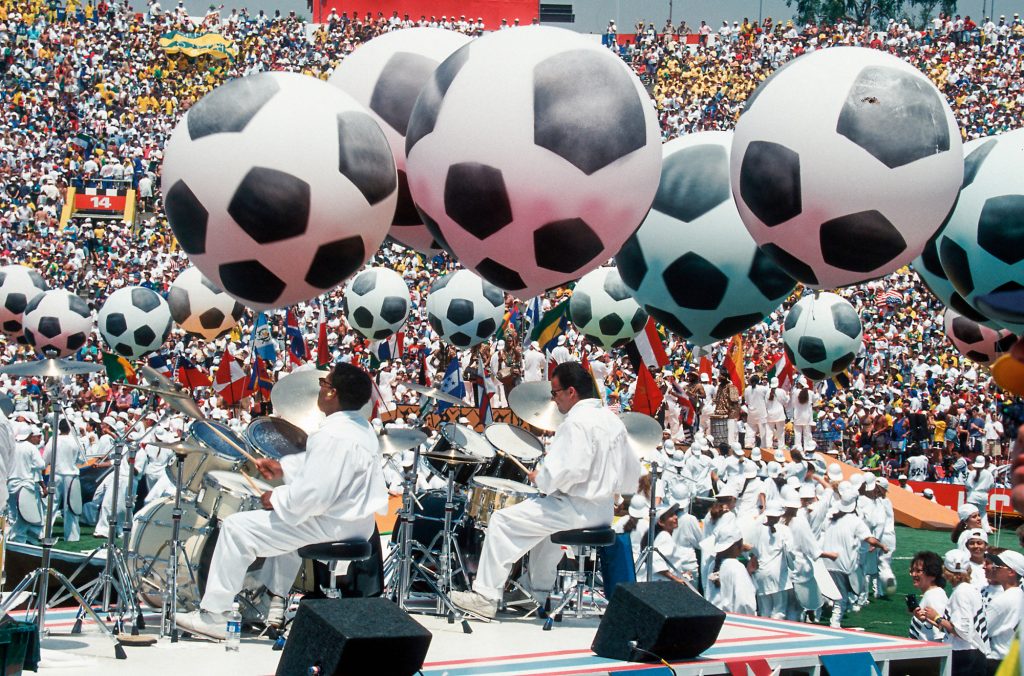
Legendary World Cup chants are more than background noise; they act as live signals of emotion, identity, and pressure that players and referees respond to in real time. When whole sections of a stadium move and sing together, the rhythm and volume of those songs can change how brave teams feel under the press, how quickly they play forward, and how you interpret what is happening over 90 minutes. Seeing chants as active forces rather than soundtrack helps you read momentum swings and tactical choices with much more clarity.
Why National Chants Feel Different From Club Songs
World Cup chants carry national symbolism rather than club rivalry, so they compress wider stories of history, pride, and expectation into a few repeated lines and melodies. In many cases, fans who rarely attend club games still know the national songs by heart, which makes the sound inside the stadium more diverse and emotionally charged than a typical league fixture. For viewers, that intensity means a familiar chant returning at key moments often signals not just support, but a collective demand for risk-taking or composure that you can then see reflected in how the team plays.
How Legendary Chants Act As Momentum Switches
Certain chants have become so associated with specific national teams that their emergence during a match often coincides with visible shifts in tempo, pressing, or risk level. When a stadium locks into a rhythmic, unified song after a spell of pressure or a near-miss, it can push players to increase their line of engagement, step into duels more aggressively, or play longer, braver passes into half-spaces. If the noise drops or fragments into scattered whistles and grumbles, you will often see the opposite: slower circulation, safer back-passes, and fewer runners beyond the ball.
From a viewing perspective, treating these chants as momentum markers helps you separate deliberate tactical changes from emotional surges. If a coach has clearly instructed a deeper block but the crowd starts urging forward passes with a familiar anthem, you might notice a short phase where the team’s behaviour drifts from the game plan. Recognising that tension between tactical intention and emotional pressure is key to understanding why some teams lose control of matches they seemed to be managing well.
What To Watch For When Legendary Chants Rise During ดูบอลสด
When you ดูบอลสด at World Cup time, the director often cuts to fans precisely when famous chants are rising, because those moments tend to frame how both teams respond to the game state. Instead of seeing these cutaways as interruptions, you can use them as cues to focus on the next few phases of play: how the pressing line moves, whether the ball starts going wide earlier, and how comfortable defenders look on the ball. Over the next five to ten minutes, the soundtrack of legendary songs becomes a rough barometer of which team is being pushed by its own support and which side is trying to quieten the crowd with possession and tempo control. Watching with this mindset links sound, camera choices, and tactical behaviour into one coherent picture rather than separate elements.
How Chants Interact With xG And Our Sense Of “Deserved” Results
Expected goals (xG) models rate chances by location, angle, and context, but they do not “hear” the stadium, so they cannot account for how loud chants change the feel of each attempt. A long-range effort that sails into the stands after a famous anthem erupts can feel like a huge moment, yet it may barely register in xG terms, while a quiet cutback in a subdued atmosphere might carry far higher probability. At the World Cup, legendary chants magnify this gap between emotional weight and statistical value because every half-chance for a national side feels defining.
When you track both crowd reaction and xG summaries across a match, you quickly see patterns where the team with the louder narrative does not always have the better chances. Recognising this helps you avoid reading every chorus as evidence that a side “deserves” a goal and instead judge whether their attacks are consistently reaching high-value zones. Legendary chants then become context for why shots are taken from risky positions—players are responding to emotional surges—rather than proof of underlying dominance.
How To Mentally Balance Noise And Chance Quality
A practical way to balance what you hear with what you know is to mentally tag each big roar with the rough area of the shot or attack: inside central box, wide channel, or outside the box. Over time, you will notice that legendary songs often spike after flurries of low-quality shots or pressure that look impressive but rarely translate into top xG chances. By cross-referencing that with post-match graphics, you train yourself to separate emotional crescendos from the quieter, more efficient patterns that usually decide tournaments. That habit is especially useful when judging whether a team’s failure to score was bad finishing, good defending, or simply a mismatch between sound and shot quality.
How Different Chants Reflect Different Football Identities
Chants are not just about volume; their rhythm and tone often mirror how a nation likes to see its team play. Some traditions favour fast, energetic songs that reward high pressing, constant duels, and relentless forward motion, while others lean toward more measured, anthem-like chants that celebrate control, resilience, or technical mastery. When those musical identities line up with on-pitch strategy, teams often look freer and more confident; when they clash, you can see nervousness or confusion in how players respond to the crowd’s demands.
As a viewer, you can listen for whether the song speeds up or slows down when a team is chasing a goal, then compare that to how the tempo of the passing changes. If the chant urges direct play and you see defenders launching more hopeful crosses or long balls, you are watching the cultural desire for drama overriding a more efficient, possession-based approach. Conversely, when fans stay calm and keep to slower, anthem-like songs even while trailing, teams may feel more permission to keep building patiently.
A Simple Checklist For Reading Chants In Real Time
Given how constant the noise can be at World Cups, it helps to have a simple structure for paying attention to chants without missing the ดูบอลสดออนไลน์มือถือ ช้าง itself. The numbered sequence below focuses on the most actionable signals that legendary songs give you about how the next phase of the match may unfold.
- First major chant: Note when the first full-stadium chant starts (early dominance, under pressure, or after a big moment) and link it to the team’s game state.
- After a near-miss: Watch whether the same chant returns and whether it triggers higher pressing or more direct passing in the next five minutes.
- During opponent dominance: Listen for shifts from upbeat songs to more anxious or fragmented noise, and see if the team drops deeper or stops counter-attacking.
- In the final 15 minutes: Track whether chants push for immediate vertical play or encourage patience, then compare that to substitutions and formation changes.
- After the final whistle: Observe which chants persist or fade; they often hint at how much emotional pressure will carry into the team’s next match.
Using this checklist turns chants from a blur into a set of recurring signals you can read and compare across matches and tournaments. Over time, you start to recognise national patterns—for example, fan bases that drive their team into chaos with urgent songs versus those that stay composed and supportive through long spells of control or suffering. That pattern recognition lets you enter future World Cups with expectations about how certain atmospheres will likely interact with specific tactical styles.
How Legendary Chants Travel Beyond The Stadium
World Cup chants do not stay inside the ground; they spill into fan zones, streets, and global broadcasts, creating a shared rhythmic language for people watching in different time zones. Clips of supporters singing on public transport or cleaning up stands after matches go viral, reinforcing stereotypes of discipline, passion, or creativity that then colour how neutral viewers perceive those teams during games. When you watch a match after seeing those images, you often expect certain behaviours—non-stop noise, respectful celebrations, or choreographed routines—which shapes how you interpret even small dips or surges in volume on the live feed.
For anyone trying to understand the tournament more analytically, this means recognising that your perception of “who has the better fans” is being built before the whistle, not just during the 90 minutes. Being aware of that pre-loaded narrative helps you keep a clearer view on whether a crowd is actually backing its team relentlessly or drifting in and out, and how much that correlates with tactical control on the pitch. Legendary chants, once they enter global culture, become part of the storytelling framework that surrounds every pass, press, and shot.
Summary
Legendary World Cup chants are not just catchy songs; they are live emotional levers that shape how players feel, how coaches manage risk, and how viewers interpret the flow and fairness of a match. By listening for when these anthems rise, how they change after big moments, and how they align—or clash—with underlying xG and tactical patterns, you can move from simply enjoying the noise to using it as a tool for deeper match reading. Next time a World Cup stadium erupts into a famous chant, treating it as a tactical signal rather than just a soundtrack will help you understand not only what happens next, but why it unfolds that way under the biggest possible spotlight.